Location Guide · 8 min read
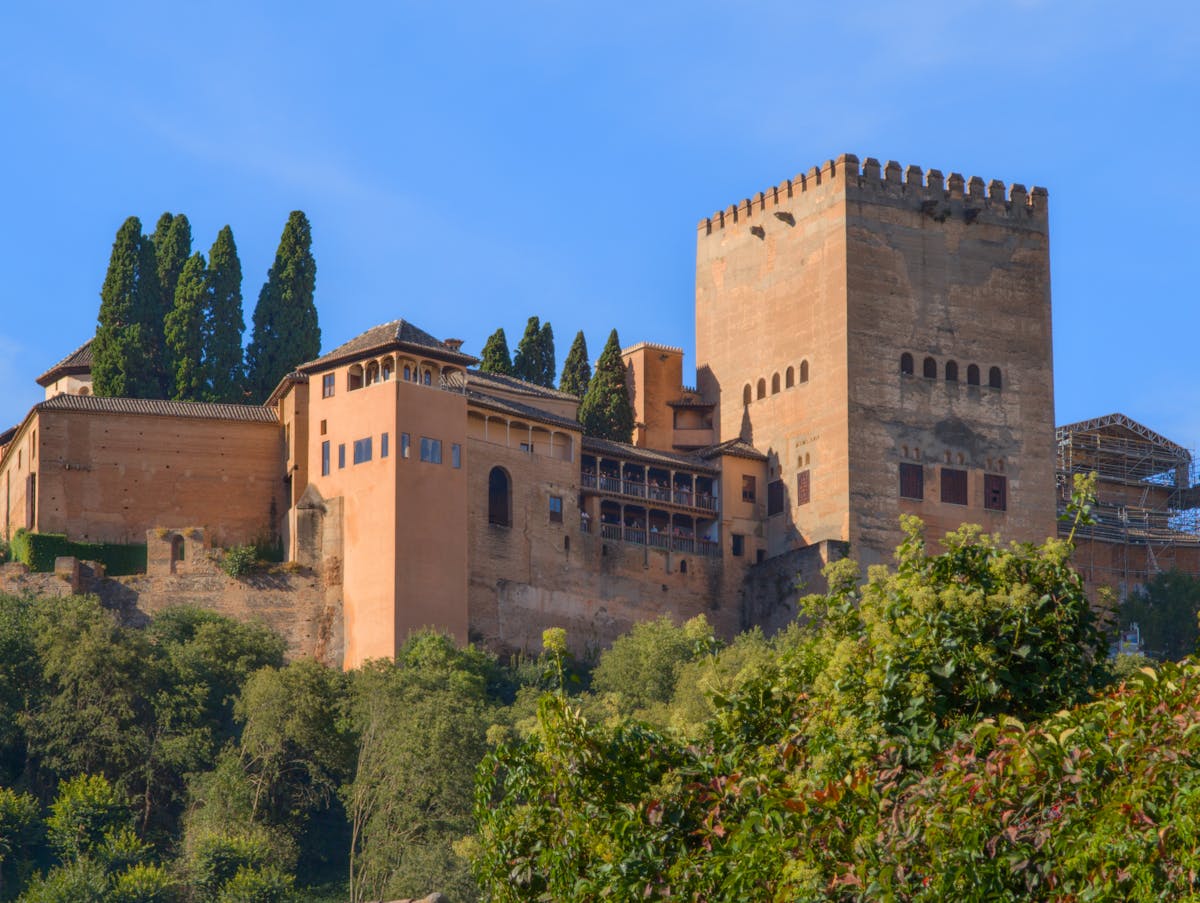
Of the four Andalusian markets we cover, Granada is the one that offers the best value — and the one most often overlooked by international buyers. It is a historic university city at the foot of the Sierra Nevada, crowned by the Alhambra, and it still runs on genuine Spanish daily life rather than on foreign demand. That is precisely its appeal, and precisely why it needs explaining carefully.
This guide sets out what Granada is as a market, how its neighbourhoods differ, what a purchase really costs, and where the specific risks sit — as clearly about the drawbacks as the attractions.
Granada's defining feature is contrast. Within roughly an hour you can be skiing in the Sierra Nevada or standing on the coast — a combination almost nowhere else in Europe offers. The city is compact, walkable and unusually alive for its size, sustained by one of Spain's largest and oldest universities. That student population, together with steady year-round tourism drawn by the Alhambra, creates consistent rental demand across both long-let and short-let markets.
Now the honest counterweight. Granada is inland: no sea view, no coastal micro-climate, and winters that are genuinely cold by Andalusian standards — frost, grey days and a real need for heating from December to February. It is also a smaller international-buyer market than the Costa del Sol or Málaga city, meaning less English-language infrastructure, fewer foreign-facing agents and thinner published market coverage. If you want a turnkey expat environment, Granada is not it. If you want a Spanish city that has not been reshaped around foreign buyers, it is difficult to beat.
"Granada rewards buyers who want to live in Spain rather than beside it. That is a genuine strength — but it also means you will do more of the work in Spanish, and you should plan for that from the outset."
The UNESCO-listed Moorish quarter facing the Alhambra, and the most photographed part of the city. Cobbled lanes, whitewashed walls, extraordinary views. The trade-offs are equally real: protected status places meaningful restrictions on what you may alter, renovation consents can be slow and prescriptive, vehicle access is difficult or in places impossible, and many properties have no lift and no parking. It is a wonderful place to own a home and a demanding place to buy one.
The old Jewish quarter, below the Alhambra on the opposite flank to the Albayzín. Characterful, lively, well served by bars and restaurants, and consistently popular with Spanish residents and incoming buyers alike. Access is generally easier than the Albayzín, though parts are still steep and historic stock carries the usual constraints.
The commercial and civic heart of the city: nineteenth- and twentieth-century apartment blocks, good transport, everything on your doorstep. Less romantic than the hill quarters and busier, but far more practical for everyday living and usually simpler to buy and maintain.
Residential districts south and west of the centre — practical rather than picturesque, with modern blocks, local shops and ordinary Spanish neighbourhood life. They offer noticeably better value per square metre, and for buyers prioritising space, a lift, parking and a manageable renovation they are often the sensible answer.
A carmen is Granada's distinctive property type: a walled house with an enclosed garden, terraced into the hillside in the Albayzín or Realejo. Rare, coveted and priced accordingly — and they concentrate every complication described above into a single purchase. Not a property type to buy on a weekend viewing trip.
Beyond the city, the Alpujarras and the wider province offer farmhouses, cortijos and village properties at prices that can look startlingly low. Some are excellent. Others carry problems that only surface after completion.
The recurring risks are specific: buildings constructed without licence or on land not zoned for residential use; extensions that were never legalised; missing or unregistered licencia de primera ocupación; and utilities that are not what they appear — off-grid electricity, shared or informal water supply, and water rights that may not transfer with the property. A rural purchase requires proper legal due diligence by an independent Spanish lawyer before any deposit is paid, including a land registry and cadastral check and confirmation from the town hall of the property's planning status. That is the difference between a bargain and an unsellable asset.
Granada averages around €2,200/m² asking for prime residential — the lowest of the four markets we cover, and a substantial discount to coastal Andalucía. These figures are indicative, compiled from public local registries and published market sources: a starting point for budgeting, not a valuation of any particular property. Individual streets in the Albayzín or Realejo sit well above the average.
The purchase price is only part of the number. Below is the standard Andalucían cost structure, which applies in Granada exactly as elsewhere in the region.
| Cost | Resale property | New-build |
|---|---|---|
| Transfer tax (ITP) | 7% (Andalucía) | N/A — not applicable |
| VAT (IVA) | N/A — not applicable | 10% |
| Stamp duty (AJD) | N/A | ~1.2% |
| Notary & land registry | Applies | Applies |
| Independent legal fees | 1–1.5% | 1–1.5% |
| Total all-in buying cost | ~12–14% | ~12–14% |
| 3% retention | Withheld from a non-resident seller | N/A |
| NIE number | ✓ Mandatory before completion | ✓ Mandatory before completion |
Two points deserve emphasis. The 3% retention is a seller-side obligation, not a buyer tax: where the seller is non-resident, the buyer withholds 3% of the price and pays it to the Spanish tax authority against the seller's potential capital gains. And an NIE number is mandatory before completion — no NIE, no escritura.
There is also an arithmetic point that matters more in Granada than in Marbella. Notary charges, land registry fees and minimum legal fees are largely fixed, so on a lower purchase price they represent a proportionally larger share of your total costs — meaning the "12–14%" rule of thumb sits at the upper end, or above it, on smaller purchases. We set this out in detail in our guide to the true cost of buying in Spain.
Granada concentrates several of the situations in which a buyer's agent earns their fee. Protected and listed buildings require you to know what can and cannot be altered before you commit. Rural purchases turn on legal questions invisible in a listing. English-language coverage of the local market is thin, so comparables are harder to establish independently. And — the point most buyers miss — most agents in Spain represent the seller; their duty and their commission run in the other direction. An independent buyer's agent works only for you.
Foreign demand for Spanish property remains strong. British buyers are the largest foreign nationality purchasing in Spain, and foreigners bought a record 97,500 homes in Spain in 2025, equal to 13.82% of all sales. You will also see +14.3% year-on-year price growth quoted; that is a national figure from Tinsa and should never be read as a Granada or Andalucía number. Granada is a smaller, quieter market and behaves differently from the national average.
It is also worth knowing that buying is now fully decoupled from residency. The Golden Visa was abolished on 3 April 2025, so a purchase no longer carries any immigration benefit. The Non-Lucrative Visa and the Digital Nomad Visa both remain available as separate routes, which we cover in our guide to Spanish residency after the Golden Visa. Separately, if the headlines about a proposed 100% surcharge on non-EU buyers have given you pause, we have set out the factual position in our explainer on Spain's 100% tax.
Granada suits buyers who want cultural depth, real Spanish daily life and the best value of the four markets we work in, and who are comfortable with an inland location, cold winters and a less international environment. It suits buyers who will do their homework on a building's protected status or a rural plot's legality — or appoint someone to do it properly on their behalf. It suits buyers less well if they want sea views, year-round warmth, or a market that comes pre-translated. If the first description sounds like you, Granada is one of the most rewarding places to own a home in Andalucía.
Tell us what you are looking for and we will give you a straight assessment — including the reasons Granada might not be the right fit. The first conversation is free and carries no obligation.
Book a Free ConsultationUpdated June 2026. We revise this page as market conditions and rules change.
This article is general information and is not tax or legal advice. Always confirm your specific position with a qualified Spanish lawyer and a tax adviser (gestora) before committing to a purchase.